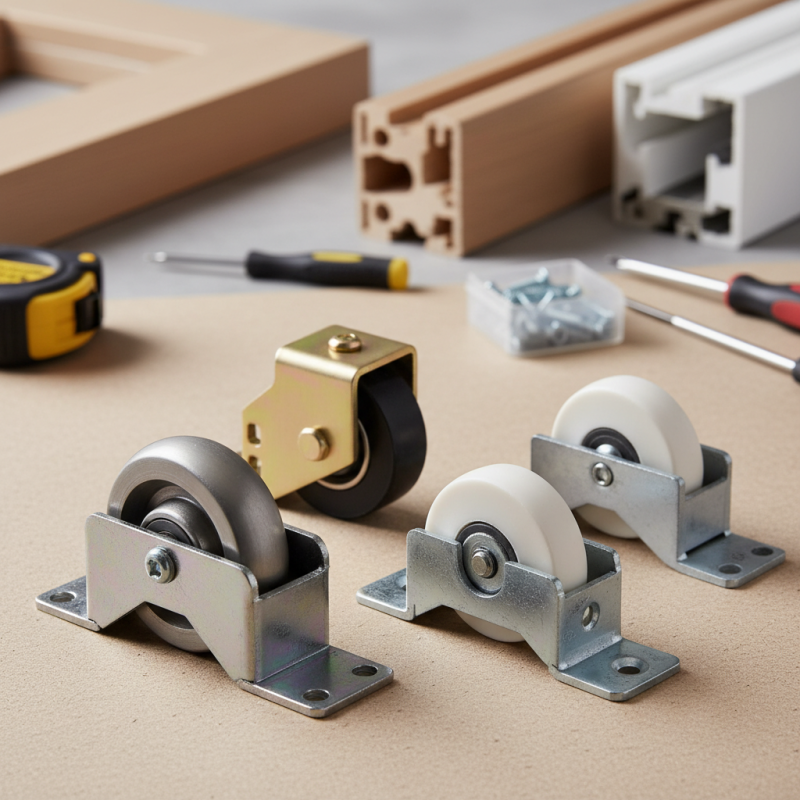
How to Choose the Right Sliding Roller for Your Needs?
Choosing the right sliding roller is essential for your projects. With various options available, it can be overwhelming. A sliding roller affects the ease of movement for doors or windows. Selecting one requires careful consideration.
Take note of the weight capacity. Some sliding rollers are designed for heavy doors, while others suit lighter applications. The material also matters; plastic rollers are often quieter but may wear out faster. On the other hand, metal rollers provide durability but can be noisier.
Consider your specific needs. Are aesthetics important? If so, the design should match your space. Often, people overlook these details in their haste. Reflect on the long-term benefits of making the right choice. A sliding roller may seem small, but it plays a big role in functionality. Don't rush; take your time to find the perfect fit.
Understanding the Basics of Sliding Rollers and Their Applications
Sliding rollers are essential in various applications. They improve mobility and reduce friction in moving parts. Understanding their types and uses is vital for optimal selection. Reports indicate that the global sliding roller market is expected to grow by 5% annually, highlighting their importance in numerous sectors.
Choosing the right sliding roller depends on specific needs. For instance, lightweight materials like plastic may suit home applications. In contrast, heavy-duty settings often require steel rollers for enhanced durability. A study showed that 70% of mechanical failures are due to improper roller selection. Awareness of such data ensures informed decisions.
Design and environment play a crucial role. Temperature fluctuations and load capacity can impact performance. Reflecting on the specific conditions in which rollers operate is necessary. Common mistakes include overlooking these aspects, resulting in inefficiency. This has led many to reconsider their choices, learning through experience.
Types of Sliding Rollers: A Comprehensive Overview
When selecting sliding rollers, understanding the types available is crucial. There are various categories, each tailored to different applications. For instance, some rollers are optimized for heavy loads, while others excel in speed and maneuverability. Consider the environment too. Indoor and outdoor settings require different materials and designs. It’s essential to align your choice with specific needs.
Many users overlook the importance of weight capacity. A roller that’s too weak can result in damage or accidents. Likewise, track compatibility is often underestimated. Not all rollers fit every track type. This mismatch can hinder performance. Some find out too late that their decision was not ideal. Testing options before purchasing helps avoid regrets later.
Finally, think about maintenance. Certain materials may require more frequent upkeep. Weigh this against the convenience you desire. A low-maintenance option might save time but could lack performance in demanding situations. Remember, a thoughtful choice reflects on both durability and efficiency. Carefully considering these factors can lead to better outcomes.
Factors to Consider When Choosing a Sliding Roller
When selecting a sliding roller, several key factors can guide your choice. One important aspect is the weight capacity. Consider how much weight the roller will carry. It’s crucial to match this with your intended use. A roller that can't support the weight might fail.
Another factor is material. Different materials offer varying levels of durability and performance. For instance, metal rollers are strong but may corrode. Plastic rollers, on the other hand, can be lightweight and resistant to rust. Think about where you’ll use the roller. Indoor options differ from outdoor ones.
**Tips:** Always test the roller's movement before buying. Check if it glides smoothly on the track. If not, it might hinder your work. Additionally, pay attention to the width and height. They affect installation. Not all rollers fit every track design.
Finally, consider noise levels. Some rollers produce more sound than others. If noise is an issue for you, seek quieter options. Remember, the perfect roller doesn’t always exist. Reflect on what compromises you're willing to make.
Comparison of Sliding Roller Types
This chart compares the durability ratings of different types of sliding rollers, helping you choose the right one based on your specific needs.
Assessing Material Compatibility for Sliding Rollers
Choosing the proper sliding roller requires careful consideration of material compatibility. Various materials can significantly impact performance and durability. For instance, the American Society for Testing and Materials (ASTM) reports that nylon rollers can withstand lower temperatures but may not perform well in high-load applications. They might also absorb moisture, potentially altering their effectiveness.
Metal rollers could offer better strength. Studies indicate that corrosion-resistant stainless steel provides enhanced longevity in harsh environments. However, they can be noisy when moving. Additionally, plastics designed for high friction can wear more quickly. A report by the Society of Manufacturing Engineers highlights that 70% of component failure in mechanical systems originates from improper material choices.
It’s crucial to assess the specific environment where the sliding roller will be used. Factors include load capacity and potential exposure to moisture or chemicals. Mistakes in material selection might lead to higher costs over time. Understanding these compatibility issues ensures that components work efficiently together. A half-hearted approach may lead to frequent replacements and downtime. Therefore, thorough research is essential for optimal performance.
How to Choose the Right Sliding Roller for Your Needs? - Assessing Material Compatibility for Sliding Rollers
| Roller Type | Material | Load Capacity (kg) | Temperature Range (°C) | Suitable Surfaces |
| Plastic Roller | Polypropylene | 50 | -10 to 60 | Smooth Wood, Linoleum |
| Metal Roller | Stainless Steel | 200 | -20 to 100 | Concrete, Metal |
| Rubber Roller | Natural Rubber | 75 | -30 to 80 | Tile, Wood |
| Nylon Roller | Nylon 6 | 100 | -40 to 90 | Plywood, Composite Surfaces |
Tips for Proper Maintenance of Sliding Rollers
Sliding rollers are essential components in various applications. Proper maintenance is critical to ensure their efficiency and longevity. Neglect can lead to performance issues and costly replacements. Here are some simple tips to keep your sliding rollers in good shape.
Regular cleaning is vital. Dust and debris can accumulate over time. A soft cloth can help remove particles that may hinder movement. Pay attention to the tracks as well; clean them to avoid obstructions. Lubrication should be part of your routine maintenance. Use the right lubricant sparingly to prevent excess buildup. This balance can improve functionality while avoiding mess.
Inspect the rollers frequently for signs of wear. Look for scratches or dents that could affect movement. Address any issues promptly. Small problems can escalate if not managed early. Remember that over-tightening can cause damage too. Adjustments should be made carefully. Keeping an eye on these details helps maintain performance.