2026 Best Modular Capsule House Ideas for Modern Living?
In recent years, the concept of the Modular Capsule House has gained significant attention. These innovative structures blend functionality and aesthetics. They offer modern living solutions that cater to various lifestyles. As urban spaces become increasingly limited, the demand for smart, efficient housing grows.
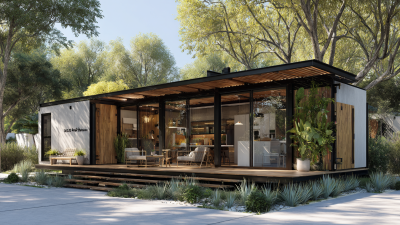
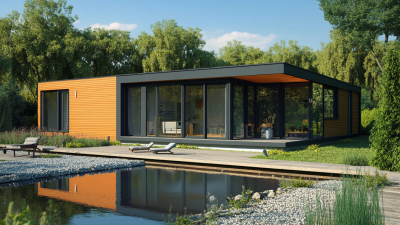
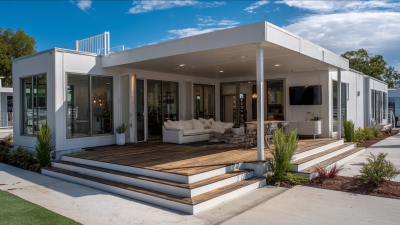
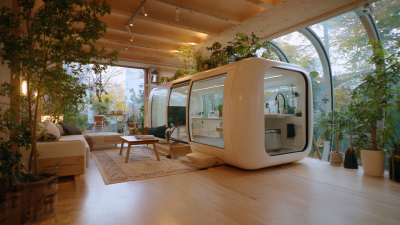
Imagine a compact living space designed to maximize every inch. A Modular Capsule House can be customized to feature large windows, creating a seamless connection with nature. They can come equipped with smart technology, making life easier and more efficient. However, while these houses promise convenience, they also prompt questions about personal space and comfort.
The appeal of Modular Capsule Houses lies in their versatility. Yet, they can sometimes feel cramped or impersonal. It's essential to consider how these small spaces affect our quality of life. Would a smaller home limit our sense of freedom? Exploring the best ideas for these homes can offer powerful insights into modern living. Embracing this trend allows us to rethink our relationship with space, functionality, and the environment.
Innovative Design Concepts in Modular Capsule Houses for 2026
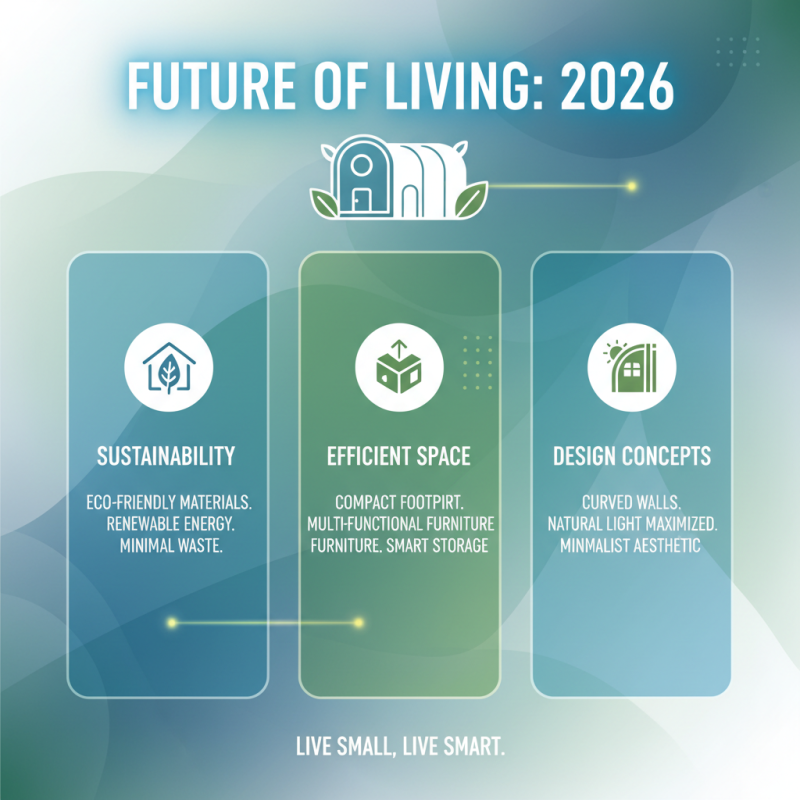
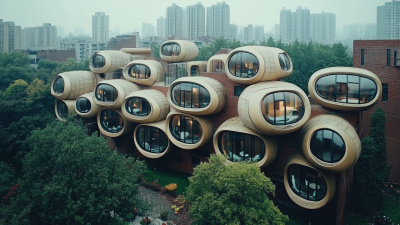
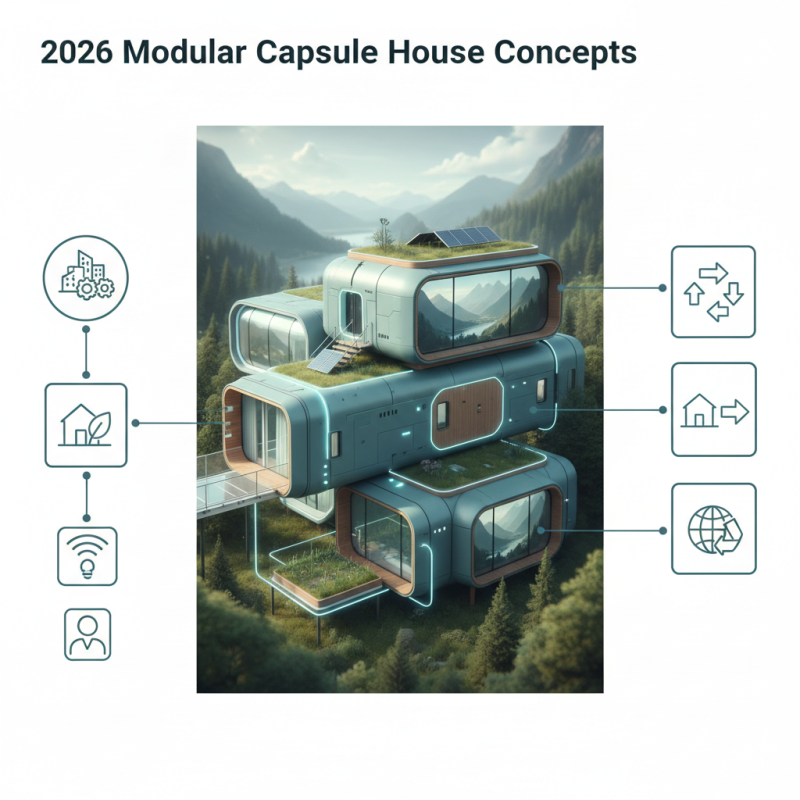
The future of modular capsule houses in 2026 reveals exciting design concepts. These homes focus on sustainability and efficient use of space. Imagine a compact living area that maximizes natural light and embraces minimalism. Curved walls and multifunctional furniture create an illusion of more space while providing comfort.
These innovative designs often incorporate recycled materials, promoting environmental responsibility. Roof gardens or vertical walls add greenery, breathing life into urban settings. However, challenges exist. Ensuring privacy in such close quarters can be tricky. Moreover, designing for extreme weather conditions demands careful planning and creativity.
Ventilation and insulation remain crucial for overall livability. Open-concept designs foster a sense of community, yet some may feel exposed. Striking the right balance between openness and coziness will be vital. Designers must constantly rethink space usage, functionality, and aesthetic appeal for realistic living scenarios. As they experiment with bold shapes and vibrant colors, the question remains—how does one adapt these fantastic ideas to fit everyday life?
Sustainable Materials and Their Impact on Modern Capsule Living
Sustainable materials are revolutionizing modern capsule living. In recent years, a surge of interest has focused on how these materials impact design and function. For instance, bamboo, a renewable resource, is gaining popularity. It grows fast and absorbs carbon dioxide efficiently. A study from the World Wildlife Fund reveals that bamboo can sequester roughly 30% more carbon than traditional timber.
Recycled materials also play a crucial role in capsule house designs. According to a report by the U.S. Environmental Protection Agency, using recycled materials can reduce energy consumption in construction by up to 50%. This statistic highlights how reusing existing resources can lead to a lighter ecological footprint. However, sourcing quality recycled materials can be inconsistent. Not all reclaimed materials meet durability standards, which poses a challenge for long-lasting structures.
Natural insulation options are emerging too. Sheep’s wool and hemp provide effective thermal regulation. A survey by the Green Building Council indicates that homes using natural insulation have better energy efficiency ratings. Yet, these materials often come with higher upfront costs. Balancing budget and sustainability continues to provoke thought in the industry. The urgency for eco-friendly homes demands innovation but also raises questions about accessibility and affordability for all.
Space Optimization Techniques in Capsule House Architecture
Space optimization is crucial in modern capsule house architecture. This innovative housing style balances comfort and efficiency. According to industry reports, over 50% of urban dwellers seek smaller living spaces that maximize functionality. Capsule houses often use modular design, allowing residents to customize layouts. This flexibility caters to individual lifestyles while ensuring efficient use of limited space.
An essential tip for maximizing space is to incorporate multifunctional furniture. Consider a sofa that doubles as a bed or a coffee table with storage beneath. Such designs enhance usability without compromising style. Additionally, using vertical space can be a game changer. High shelves or wall-mounted storage keep the floor clear, giving the illusion of a larger room.
While capsule houses can be creative and efficient, they also pose challenges. Limited space might lead to clutter if not managed properly. It's vital to regularly evaluate what items are necessary and let go of the rest. Rethinking storage solutions, like under-bed drawers or hidden compartments, can be effective. Balancing personalization and practicality is key in creating a modern capsule living environment.
Integrating Smart Technology in Capsule House Designs
The integration of smart technology into modular capsule houses is transforming modern living. According to recent industry reports, over 70% of new homeowners express interest in smart home features. These technologies enhance convenience and efficiency, creating a seamless living experience. Homes equipped with smart thermostats and lighting systems can reduce energy consumption by up to 30%.
One striking feature of modern capsule houses is the use of IoT devices. These devices allow residents to control various home elements via smartphones. Imagine adjusting the temperature or checking security cameras while commuting home. However, there are challenges. Some homeowners might feel overwhelmed by technology complexity. The learning curve can lead to frustration, making some resist these advancements entirely.
Sustainable practices are also essential. Smart technology can optimize energy use, but installation requires mindful consideration. Building materials should be eco-friendly and energy-efficient. The goal is to create homes that are not just technologically advanced but also environmentally responsible. Current statistics show that sustainable homes can increase property value by as much as 15%. This intersection of technology and sustainability is key to the future of capsule living.
Future Trends in Modular Capsule Living Spaces for Urban Areas
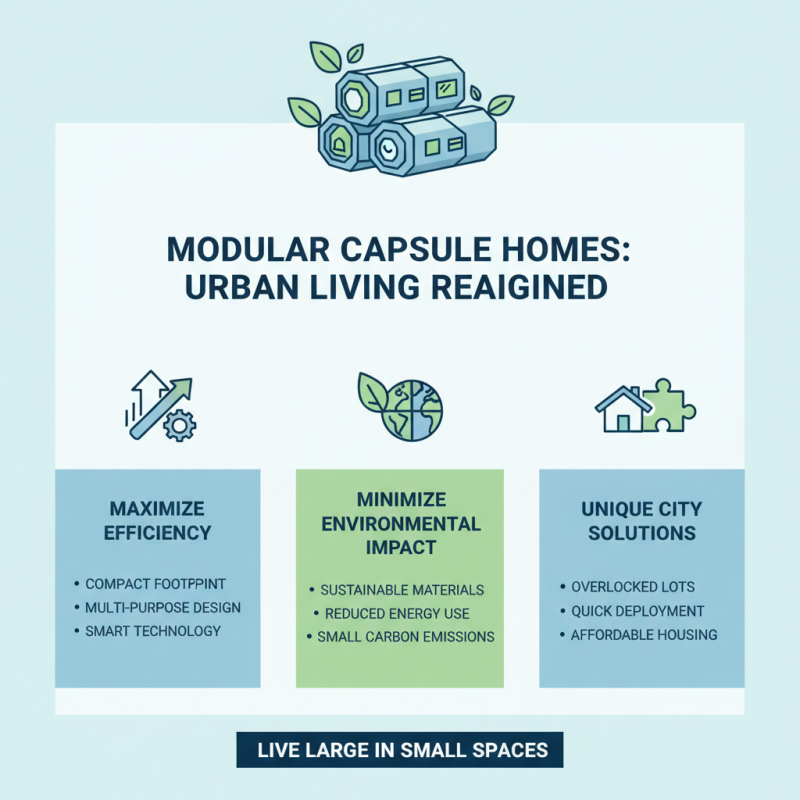
As urban living spaces dwindle, modular capsule homes are gaining popularity. These compact structures offer unique solutions for city dwellers. They maximize efficiency and minimize their environmental footprint. With smart design, these homes can fit in small lots, often overlooked in busy areas. Each capsule can serve multiple purposes, from a sleeping pod to a workspace.
One trend is integrating green technology. Solar panels and rainwater collection systems are becoming common. These features reduce dependence on city infrastructure. However, they require careful planning and design to be effective. Not every capsule will suit all urban environments, leading to potential mismatches.
There are challenges with community acceptance. People often fear the unknown, hesitant about new structures in their neighborhoods. Space is limited, and residents must learn to share. This communal living aspect can foster connections, but not everyone is ready. Balancing privacy and community might be a struggle in these innovative spaces.